




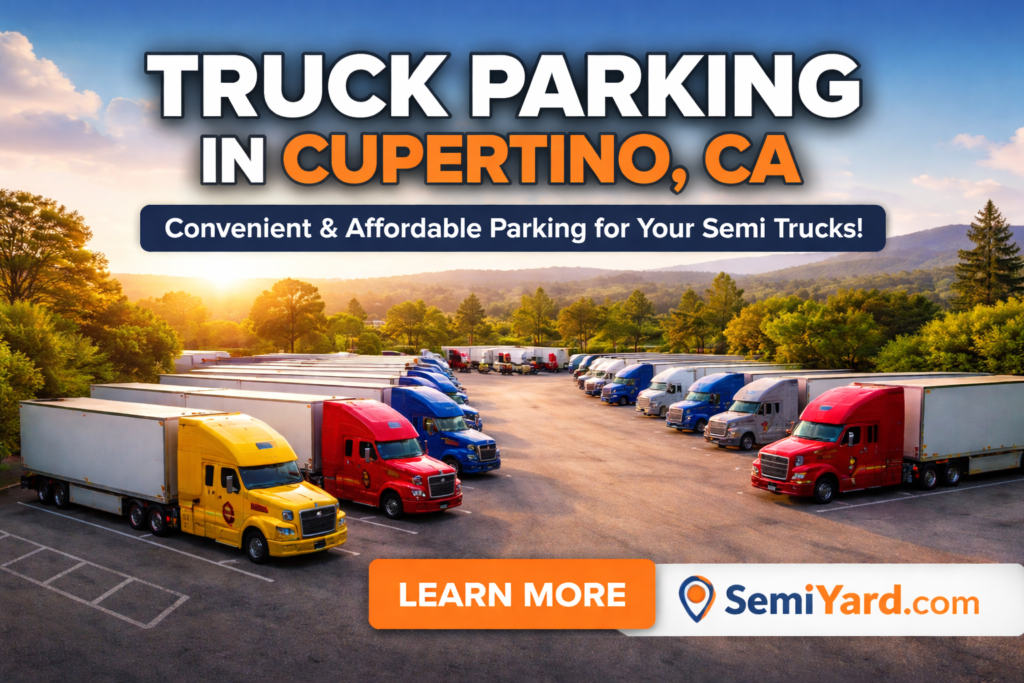
Everything professional drivers need to know about parking semis and commercial vehicles in the heart of Silicon Valley — and how Semiyard makes it effortless.
Cupertino, California is best known for being the hometown of some of the world’s most iconic tech companies. But for truck drivers delivering goods, hauling freight, or simply passing through the Bay Area, the city presents a very real challenge — finding safe, legal, and practical truck parking. Whether you’re navigating a scheduled delivery on De Anza Boulevard or looking for overnight rest near Interstate 280, understanding your options here can be the difference between a smooth run and a costly fine.
Table of Contents
ToggleThe Cupertino Parking Challenge for Truckers
Cupertino sits in the heart of Santa Clara County, surrounded by dense residential neighborhoods, commercial corridors, and tech campuses with strict access rules. Most city streets have posted weight limits and overnight restrictions that make parking a semi-truck far more complicated than it sounds. Street parking for commercial vehicles is heavily enforced, and designated truck rest areas within the city limits are practically nonexistent.
Drivers who haul electronics components, warehouse freight, and retail deliveries into Cupertino regularly report difficulty finding compliant rest spots after hours. The nearest truck stops on major corridors like US-101 or I-880 can be miles away — a real concern for drivers operating under strict Hours of Service (HOS) regulations. Every minute spent circling for a spot is a minute eating into mandated rest time.
What to Look For in Cupertino-Area Truck Parking
When searching for truck-friendly parking in and around Cupertino, commercial drivers should prioritize a few key factors: legal compliance with local zoning and weight ordinances, proximity to delivery routes, security lighting, and access to basic amenities like restrooms or fuel. Industrial areas near Stevens Creek Boulevard and along the northern edge of the city toward Santa Clara offer limited but viable options for daytime staging.
How Semiyard Solves the Problem
This is exactly where Semiyard steps in. Semiyard is a purpose-built platform designed to connect commercial truck drivers with verified, available parking spaces — whether you need a spot for two hours or two nights. Instead of circling unfamiliar streets or relying on outdated maps, drivers can pull up the Semiyard platform, filter by location, availability, and rig size, and book a spot in minutes.
For the Cupertino and greater Silicon Valley area, Semiyard aggregates parking options across industrial zones, private lots, and partner facilities that welcome commercial vehicles. Every listing on Semiyard includes clear details: hours of access, security features, clearance heights, and whether the spot accommodates standard 53-foot trailers or oversized loads. No guesswork. No last-minute scrambles.
What sets Semiyard apart is its driver-first philosophy. The platform was built by people who understand the pressure of HOS windows, tight delivery schedules, and the real cost of a parking ticket. Whether you’re an owner-operator running solo or a fleet manager coordinating multiple trucks across the Bay Area, Semiyard gives you the visibility and control you need — all from one easy-to-use dashboard.
Tips for Truck Drivers in Cupertino
Before your next run through Cupertino, keep these practical tips in mind. Plan your parking before you arrive — last-minute searches in dense urban areas almost always cost you time and money. Use platforms like Semiyard to pre-book confirmed spaces so your rest period starts the moment the engine cuts off. If you’re staging for a morning delivery, look for lots in neighboring Santa Clara or San Jose that offer easier highway access with fewer restrictions.
Always check local ordinances for any street you’re considering, especially in residential-adjacent zones. Cupertino’s code enforcement is active, and fines compound quickly. When in doubt, a paid, verified lot through Semiyard is always safer — and often more affordable — than the risk of a violation.