




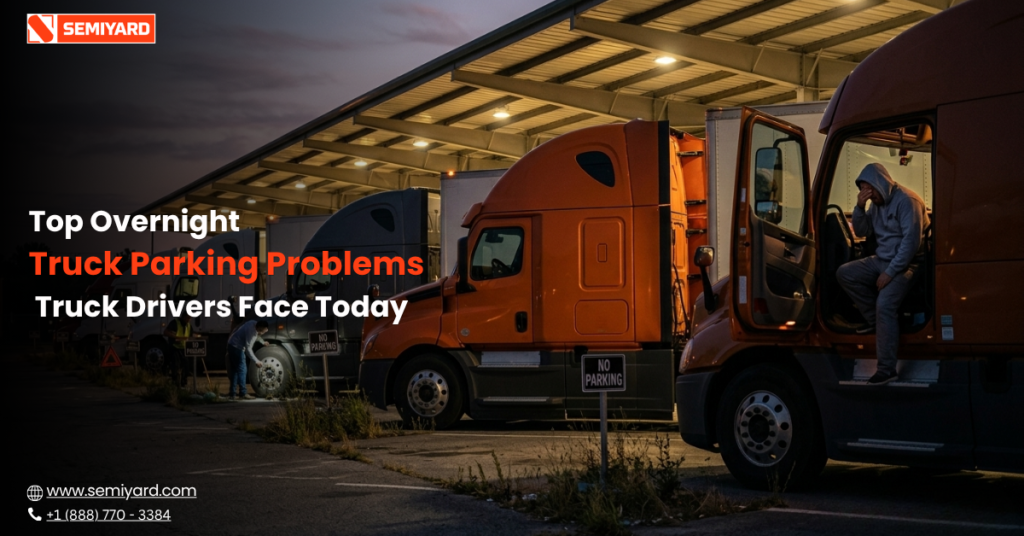
Every night across America, thousands of truck drivers face the same stressful question: “Where am I going to park tonight?”
It might sound simple, but the men and women who keep this country’s supply chain moving often find parking one of their biggest headaches when doing their job. The overnight truck parking crisis in the United States has been escalating for decades, impacting more than just driver convenience. It impacts road safety, driver health, federal compliance, and overall freight industry efficiency.
This overnight truck parking blog explains the most common overnight parking challenges truck drivers are facing today and why addressing them is more important than ever.
Table of Contents
ToggleKey Takeaways
- There are far too few legal parking spots for the millions of trucks on the road every day.
- A lack of space forces drivers to park in unauthorized areas, such as highway shoulders.
- Federal rest laws are hard to follow when drivers cannot find verified places to stop and park by their deadline.
- Even when parking is found, many truck stops lack clean, reliable, and safe amenities.
- The constant stress of searching for parking leads to driver fatigue, which threatens public safety.
- Real-time information and 24/7 monthly access by Semiyard can be a game-changer for drivers who need available spots.
The Scale of the Truck Parking Shortage in the USA
Every single day, millions of commercial truck trips take place all over the country. But the number of legal, designated truck parking spaces has not kept up with demand.
Truck parking shortage. The USA is not a new problem—for over 20 years, the Federal Highway Administration has been studying, documenting, and vocalising it. Although awareness has been raised, adequate steps to bridge the gap have not yet been accomplished. Research points out that at peak overnight times, as many as five trucks can be vying for a single truck parking space.
This imbalance between supply and demand creates a chain reaction of issues that drivers face every day while on the road.
Anyone who has been driving a truck for long enough knows just how hard it can be to find somewhere to park.
Limited Parking Availability at Truck Stops
The biggest pain point for truck drivers is parking availability at local truck stops. By mid-afternoon, most truck stop lots are already filling up. Drivers on tight delivery schedules frequently do not have the time to pull over early enough to get a space, and by the time they are required (by Hours of Service) to stop for parking, there is no chance.
This puts drivers in a tough position. They either test their limits with reckless driving, make unsafe moves, or drive around looking for someone to leave.
Other truck stops run on a first-come, then-first-served basis with no reservation system, which can make pre-planning nearly impossible. This uncertainty turns an already high-pressure job into a worse nightmare.
Nevertheless, a pre-arranged parking slot by Semiyard can be a game-changer in such circumstances.
Also Read: Truck Parking that Fits Every Driver’s Schedule
Safety Risks When Parking in Unauthorized Spots
As available parking spots decrease, drivers often park on highway on-ramps, exit ramps, side roads, weigh station bypasses, and industrial backroads. These areas may seem safe, but they carry significant risks.
Parking safety is a serious issue that often goes unnoticed. Risks for trucks parked on road shoulders or poorly lit areas include:
1. Rear-end collisions from distracted drivers
2. Cargo theft and break-ins
3. Crime in remote locations
4. Limited access to emergency services in case of an accident
Drivers are often very tired when they stop, and worrying about finding a parking spot adds stress to their fatigue. Good sleep is closely linked to safe driving. A driver who does not rest well can become a danger on the road the next day.
Truck Stop Issues Beyond Just Parking
Even when drivers finally find a parking spot at a truck stop, they still face problems. Many truck stops across the country have similar issues.
Common complaints from drivers include:
1. Long lines for fuel, food, and other basics
2. Crowded restrooms and shower facilities
3. Poor lighting and safety in parking areas
4. Dirty and poorly maintained facilities
5. Unreliable route access
6. Tight parking makes it hard to move around.
All these challenges turn what should be a restful stop into another source of stress. Drivers spend many hours on the road and need services that help them refresh physically without disturbing their mental peace.
Hours of Service Compliance Pressure
Federal Hours of Service (HOS) regulations are important because they help ensure that drivers are well-rested before getting on the road. However, there’s a problem with overnight truck parking that creates legal and safety challenges.
When drivers reach their mandatory rest limit, they may not have any legal parking options nearby. They must stop, but parking on the roadside or in unauthorized areas can lead to fines and HOS violations, which also affects their safety and the safety of others.
This situation happens more often than many realize. Drivers find themselves in a tough spot, especially at night when most of the stops are filled, which is why they are either stopping in the wrong place or pushing themselves to drive when they shouldn’t.
There is only one solution here, and that is a yard with 24/7 access in order to overcome the lack of overnight parking options.
Also Read: Monthly Truck Parking Improves Driver Productivity
Mental and Physical Toll on Drivers
When drivers experience high levels of stress and fatigue due to truck parking unavailability, their ability to perform effectively on the roads diminishes significantly. This decline in performance can manifest in various ways, such as slower reaction times, impaired decision-making, and reduced attention to crucial road signs and signals. This issue extends beyond the realm of the transportation industry; it poses a serious threat to public safety. The consequences of tired and stressed drivers can lead to an increased risk of accidents, endangering not only the drivers themselves but also passengers, pedestrians, and other road users. Therefore, addressing driver well-being is essential for enhancing overall road safety and minimizing potential hazards.
Urban and Industrial Zones Shutting Out Trucks
Many cities have made parking difficult for drivers, especially in industrial areas. Warehouses, shopping centers, and commercial districts that used to allow overnight truck parking are now putting up “No Truck Parking” signs and have 24-hour towing hotlines.
The rise of e-commerce and freight demand has increased the number of trucks in urban areas, but the parking infrastructure hasn’t kept up. When drivers finish their deliveries, they often struggle to find a place to park before their time runs out.
Purpose-built overnight truck parking solutions can help solve this problem. New platforms, like Semiyard, connect drivers with available private and commercial parking spaces round-the-clock. These services provide 24/7 access, allowing drivers to plan their parking without guessing. This improves efficiency and helps prevent business processes from becoming sluggish or ineffective over time.
Lack of Real-Time Information and Technology Tools
Many drivers struggle to find available parking spots. Even when spots exist, drivers often do not know if they are open. Information about where they can or cannot park overnight is often old, inconsistent, or simply unavailable while they are on the road.
Drivers rely on word-of-mouth from other truckers, forums, and sometimes outdated apps for information. As a result, valuable parking spaces often remain empty, while some drivers park illegally nearby, unaware of legal parking options.
With real-time data on parking availability well integrated into centralized systems, it can be accessed from a moving truck. It is time for truckers to use better parking solutions using technology, like the Semiyard app, which gives drivers real-time visibility of available spaces along their routes. This change gives a long-term solution for the trucking industry.
Conclusion
Why does solving the overnight truck parking problem matter?
The truck parking shortage is not just a simple issue; it’s part of a larger supply chain problem and can even affect public safety if drivers can’t find verified places to park. When good drivers can’t rest properly, they leave the industry, delivery times increase, and accidents rise.
To fix the parking shortage in the USA, we need action on multiple fronts. Services like Semiyard are connecting drivers with available parking lots, helping to create a convenient and more efficient parking system.
To address this issue, we first need to understand how serious it is. Long-haul truck drivers, facing tough conditions on the road, often deal with sleepless nights and other challenges that many people don’t realize.
To avoid any hassles, truckers can find convenient parking yards like Semiyard across the USA, offering clean facilities, essential services nearby, easy access to main routes, and a well-maintained environment for a pleasant and seamless parking experience. Moreover, with 24/7 access and real-time availability, truckers can now focus on roads and worry less about parking!
FAQs
What causes the overnight truck parking shortage in the USA?
The shortage comes from rising truck traffic, limited designated parking growth, city restrictions, and a lack of purpose-built lots. Demand outpaces supply, leaving many drivers without legal spots at night.
How does the lack of parking affect truck driver safety?
Drivers forced to park on shoulders or poorly lit areas face higher crash, theft, and assault risks. Poor rest from unsafe parking increases fatigue, raising accident likelihood the next day.
Why do truck stops fill up so quickly?
Many truck stops use first-come, first-served rules, limited spaces, growing freight volumes, and peak arrival times. Drivers with tight schedules often can’t arrive early enough, so lots fill fast.
How do parking shortages cause Hours of Service (HOS) violations?
When legal parking is unavailable, drivers may park illegally or keep driving past HOS limits. That leads to fines, violations, and higher safety risks from fatigue.
What problems do drivers face even after finding a truck stop?
They often find crowded restrooms and showers, long fuel lines, poor lighting, dirty facilities, tight spaces, and safety concerns—making rest less effective.
Can technology help drivers find overnight parking?
Yes. Real-time apps and platforms, such as Semiyard truck parking, show available commercial spaces, let drivers reserve slots, and reduce guesswork, making parking faster and more convenient for long-term use.
How do urban restrictions impact truck parking?
Cities and businesses often ban overnight parking, tow trucks, and remove curbside options. This reduces available spaces in busy delivery areas and forces drivers to search farther away.