



A reefer load out of Dallas still needs a truck, and a carrier calls back fast with a fair rate, a valid-looking MC number and a certificate of insurance already in your inbox. You tender the load. By Monday the truck has gone dark, the freight is missing, and the “carrier” never existed.
That story plays out every week in U.S. freight. Fraudsters have learned that brokers under time pressure are the easiest target, and a single bad tender can cost a brokerage the load, the shipper relationship and its margin for the month.
The good news: most fake carriers leave clues. This guide walks through how carrier fraud works, the red flags worth stopping for, and a vetting checklist you can run on any carrier in about 15 minutes, before you tender a load.
Table of Contents
ToggleHow carrier fraud actually works
Carrier fraud comes in a few common forms, and knowing which one you’re facing tells you what to check.
Identity theft. A scammer takes over or impersonates a real, established carrier. They use its DOT and MC numbers, copy its insurance certificate, and set up a look-alike email domain or a new phone number. On paper everything checks out, because the authority is real. Only the contact details are fake.
Double brokering. Someone posing as a carrier accepts your load, then re-posts it to another carrier at a lower rate. They collect your payment and disappear, leaving the real hauler unpaid and your shipper’s freight in the hands of a company you never vetted.
Fictitious pickups and cargo theft. The fake carrier shows up at the shipper, loads the freight and drives it somewhere it was never meant to go. High-value and easily resold loads like electronics, food and beverage, and consumer goods are favorite targets.
All three schemes share one weakness: they depend on the broker skipping verification steps. That’s where your checklist comes in.
Red flags worth stopping for
No single flag proves fraud, but two or more together should pause the tender until you’ve verified.
|
Red flag |
Why it matters |
|---|---|
|
Very new operating authority |
Fresh MC numbers have little track record; some are created only to commit fraud. |
|
Contact info doesn’t match FMCSA records |
The classic sign of identity theft: real authority, fake phone or email. |
|
Free email address or a look-alike domain |
Real fleets usually use a company domain; scammers swap one letter. |
|
Rate far below market, or accepted instantly |
Double brokers bid low to win loads they never plan to haul. |
|
Won’t share truck photos, VIN or driver details |
A real carrier knows exactly which truck is coming. |
|
Pushes for quick pay, fuel advances or a changed remit-to |
Payment redirection is where the money is stolen. |
|
Overseas phone numbers or odd call hours |
Many fraud rings operate from outside the U.S. |
|
Insurance certificate sent by the carrier, not the agent |
Certificates are easy to edit; only the agent can confirm them. |
|
Recent changes to company name, address or contact on file |
Hijacked accounts often show a burst of record updates. |
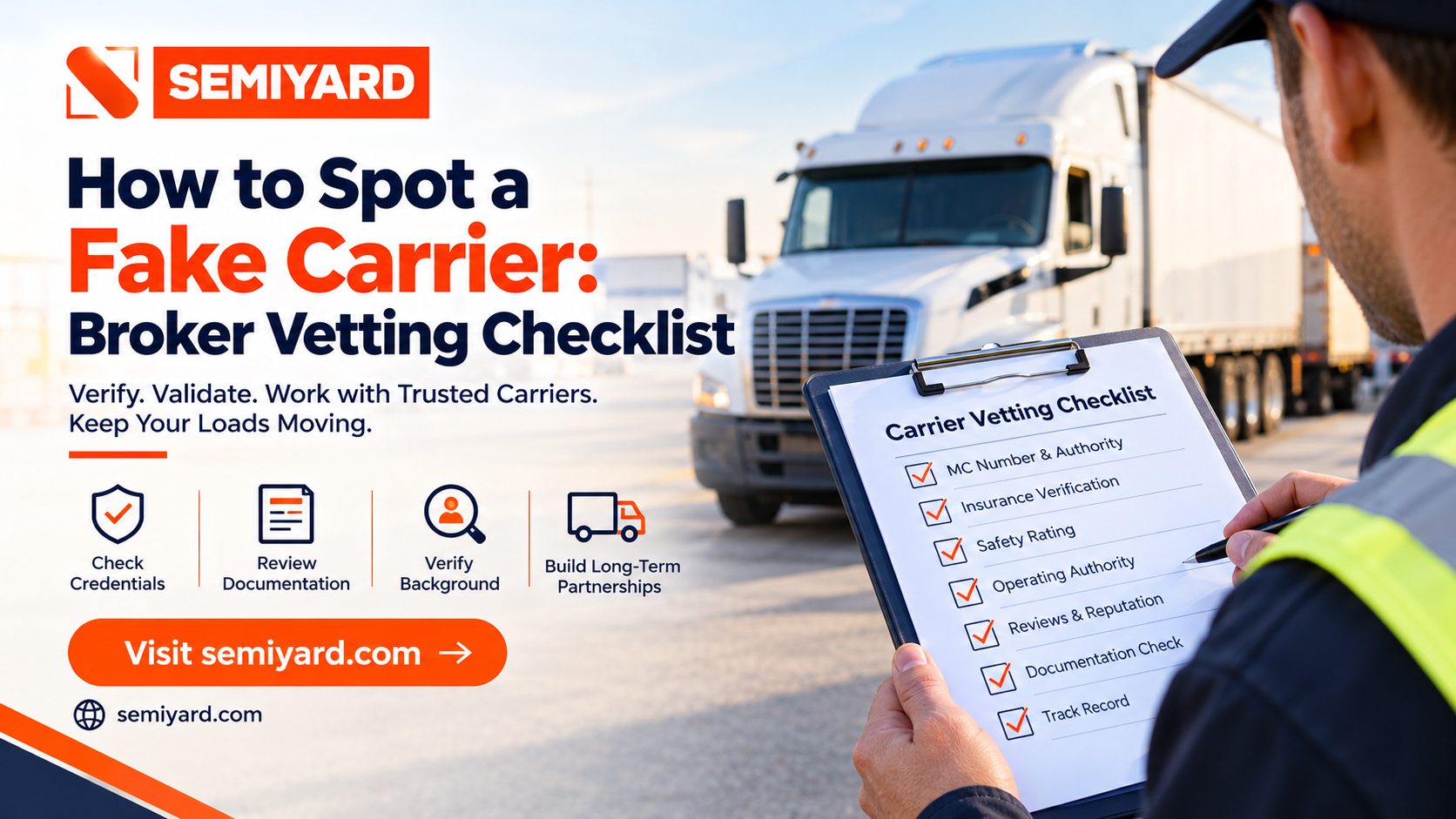
The 15-minute vetting checklist
Run these checks in order before every new carrier gets a rate confirmation. Save the results to the carrier’s file so the next load moves faster.
- Look up the DOT and MC numbers on FMCSA’s public records. Confirm the authority is active, the entity type is “carrier,” and the legal name matches the one on the paperwork.
- Compare contact details. The phone, email and address you’re using should match what FMCSA has on file. If they don’t, call the number listed with FMCSA, not the one you were given.
- Check authority age and history. Note when the authority was granted and look for recent name, address or contact changes.
- Verify insurance with the agent directly. Call the agency listed on the certificate (find its number yourself), confirm the policy is active, and ask to be added as a certificate holder.
- Review safety data. Check inspection history, out-of-service rates and crash records for patterns that don’t fit the carrier’s story.
- Confirm equipment. Ask for photos of the truck and trailer, plus the truck number and VIN. Match them against the equipment type the carrier claimed.
- Confirm the driver. Get the driver’s name and cell number, and call the driver before pickup.
- Lock down payment details. Confirm the remit-to matches the carrier’s legal name. Treat any request to change bank details as a red flag and verify it by phone using a number you sourced yourself.
- Set up tracking. Require tracking from pickup to delivery, and agree on check-call times.
- Brief the shipper. Share the truck number, trailer number and driver name so the dock can match them at pickup.
What to do if something feels off
Trust the pause. A legitimate carrier will understand a verification call; a scammer will push back or vanish.
If you spot a problem before tendering, don’t book the load and don’t tell the caller exactly which check failed. Note their details and flag the MC number internally so no one else on your team books them.
If you suspect fraud after the load is moving, act fast: call the driver and the shipper, try to confirm where the truck is, and contact law enforcement if freight may be stolen. Report the incident to FMCSA and your insurer, and alert the real carrier if their identity was used. Speed matters, because recovery odds drop sharply after the first few hours.
Start with carriers who are already verified
The checklist works, but running it on every unknown carrier eats time you don’t have on a Friday afternoon. The faster path is to source capacity from a network that has done the heavy lifting before the carrier ever reaches you.
That’s how the Semiyard Load Board is built. Every carrier is manually reviewed by Semiyard’s compliance team before going live, and verification covers:
- Driver’s license, DOT, MC and insurance documents
- Real vehicle photos and valid inspection documentation
- U.S.-based operations only, with no overseas operators allowed
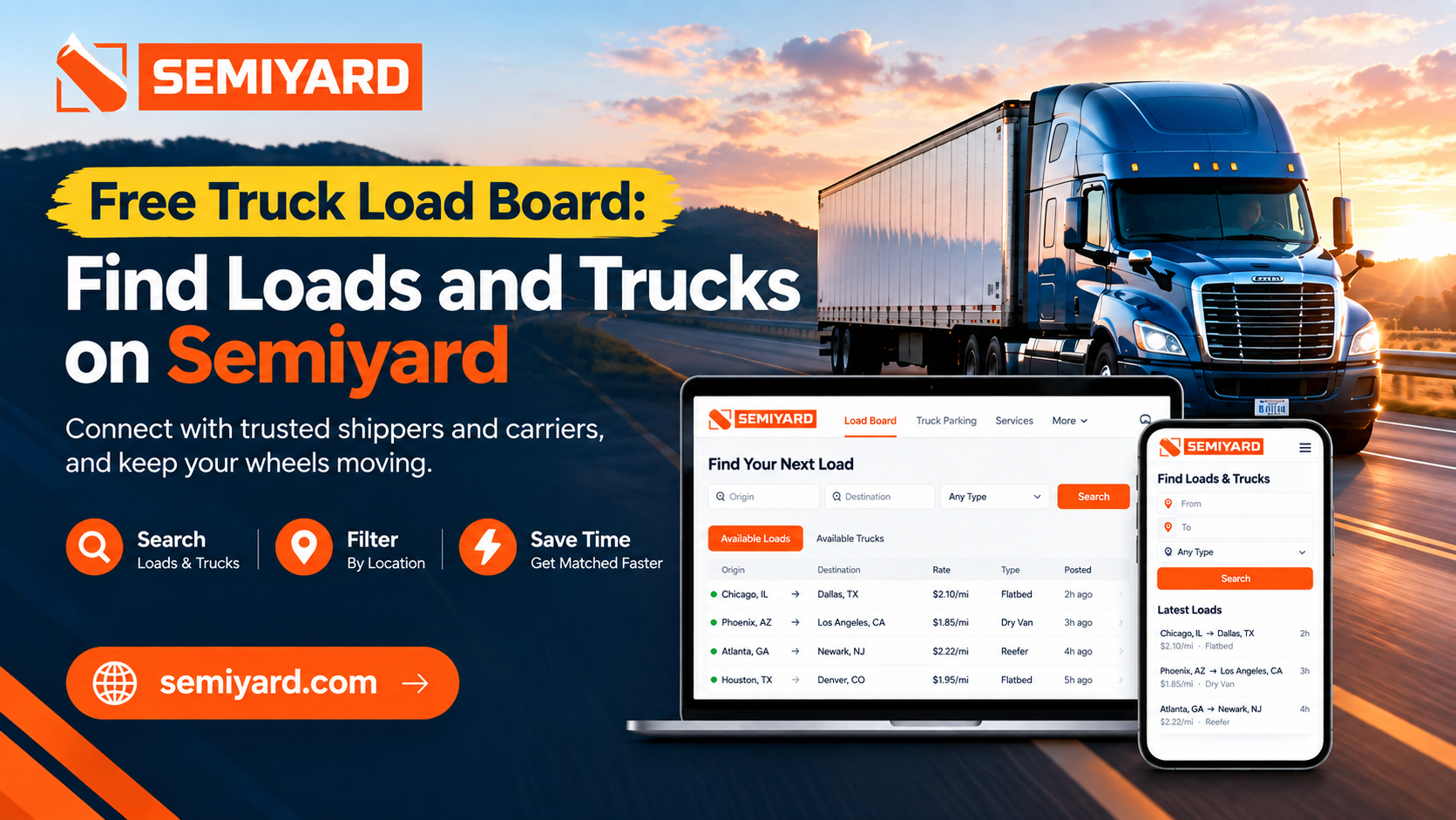
Brokers on Semiyard can post loads in minutes, search carriers by location and equipment, review partner profiles, and fill last-minute loads without endless phone calls. You still stay in control: nothing is booked without your approval. Keep running your own final checks, like a driver call and tracking, but you’ll start from a far cleaner pool.
It’s free, with no credit card needed, and gives you access to 133K+ verified carriers.
Create your free broker account and book your next load with more confidence.
Want to keep reading? Check out How Does Semiyard’s Load Board Work for Truckers and Freight Brokers, and learn how to book truck parking online in minutes.