


The freight and logistics industry is a major part of the USA economy. Each year, billions of tons of freight are carried. Yet behind this massive supply chain infrastructure lies in the constant challenge of “finding constant truck parking.” However, modern software and mobile platforms are revolutionizing this crucial element of long-haul transportation. Specialized truck parking apps are being integrated into practice at an ever-increasing rate, transforming the way drivers search for, check, and reserve parking spaces. These solutions go far beyond simple GPS navigation, adding real-time search and automated management tools for a highly efficient freight ecosystem.
Table of Contents
ToggleKey Takeaways:
- There is only about 1 parking spot available for every 11 long-haul trucks that need to rest.
- Drivers spend an average of 56 minutes every day searching for parking, wasting fuel, raising stress, and risking Hours of Service (HOS) violations.
- Mobile parking apps use real-time data, geolocation, and predictive tech to convert random searching into guaranteed reservations.
- Modern facilities use QR codes and License Plate Recognition (LPR) to reduce check-in times from minutes to seconds.
- Drivers get safer park stops, fleets save money and stay compliant, and yard owners generate extra revenue by monetizing unused space.
- Platforms like Semiyard simplify long-haul travel by combining parking bookings with load matching, fleet management, and nearby trucking service providers.
The Realities of the Truck Parking Shortage
To understand how software solutions are disrupting freight logistics, you first have to understand the depth of the parking crisis. North American and European studies consistently show a stark imbalance between the number of long-haul trucks on the road and the number of parking spaces that are actually available. Industry stats show there’s only about one parking spot for every 11 long-haul trucks that need a place to park during mandatory rest periods.
The lack of this triggers serious ripple effects across the whole supply chain:
- Wasted Drive Time & Fuel: Drivers spend an average of 56 minutes daily looking for parking. That equals thousands of dollars in wasted fuel and lost productivity per truck per year.
- Regulatory Compliance Pressures: Hours of Service (HOS) regulations are strictly enforced, compelling drivers to stop when they reach the maximum driving limits. When parking is unavailable, drivers are forced to choose between violating safety regulations and parking unsafely on highway shoulders and off-ramps.
- Safety & Cargo Security Hazards: Drivers parked on dark shoulders or in lots without attendants are at risk of collisions, freight and fuel theft, and personal danger.
- Driver Retention Challenges: High driver burnout and turnover rates across fleets can be attributed to a variety of factors, including the constant worry about where to park safely at night.
How Mobile Apps Are Solving the Crisis
The management of logistics operations for end-to-end trips is undergoing a significant transformation due to the latest digital solutions. Modern trucking apps are effectively turning parking uncertainty into predictable, manageable, and efficient journeys. This is achieved through real-time feeds, cloud computing, and user geolocation data.
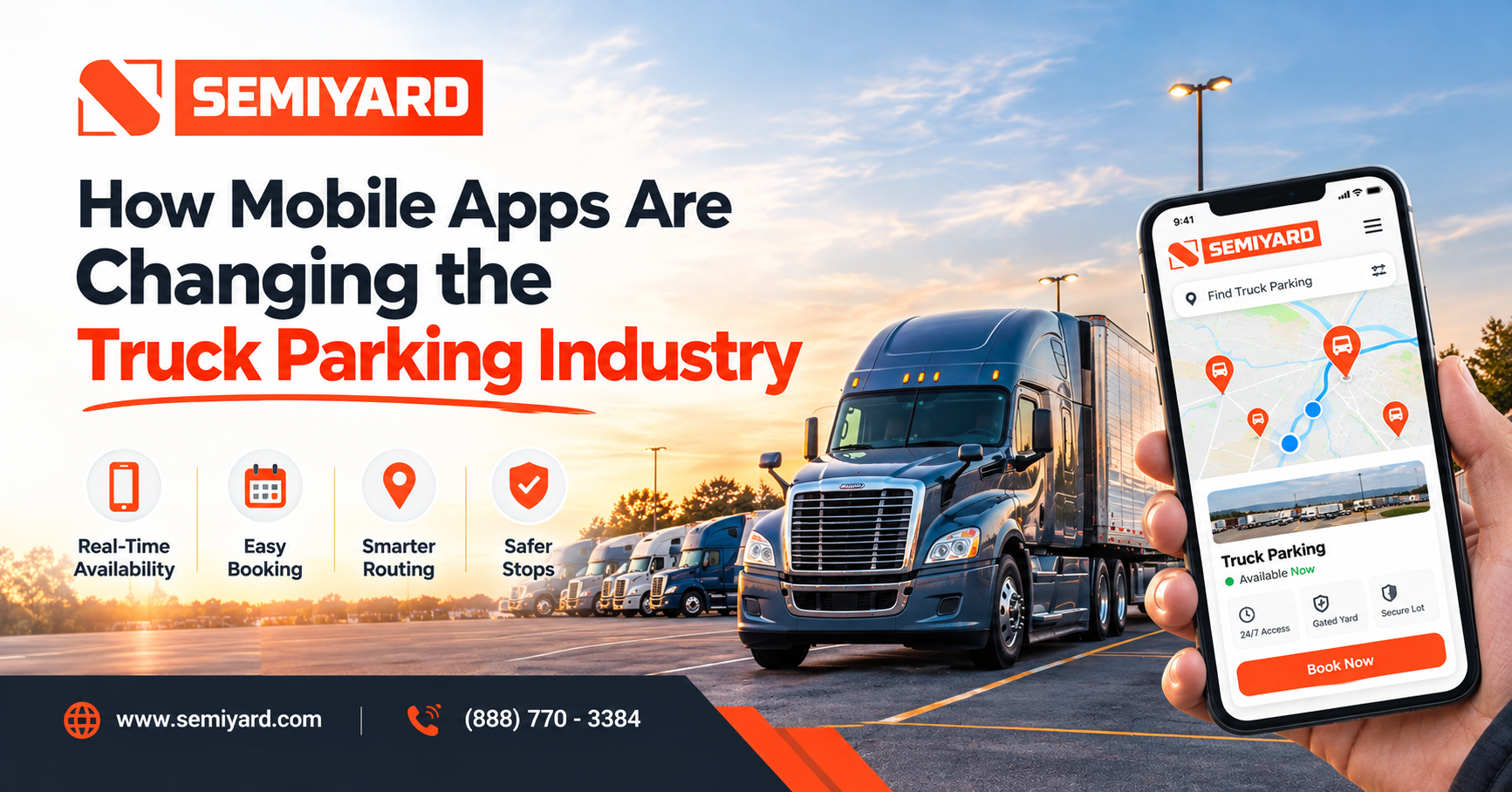
- One of the key advantages of a modern digital logistics platform is its ability to provide real-time visibility into parking spot occupancy. Drivers no longer have to drive to a rest stop and hope there is a place available. “Advanced mobile tools show you the exact lot availability before you arrive, based on user-reported status updates, occupancy sensors, and predictive algorithms.
- In the past, parking for trucks was first-come, first-served. Today, a strong mobile booking system enables drivers or fleet dispatchers to view available parking spaces on a planned corridor and pre-book parking. Drivers can book a space in advance, giving them peace of mind and the ability to maximize their operational driving hours without worrying about where to stop when their clock runs out.
- Today, yards are transforming the manual check-in process into a digital infrastructure. Smart parking system facilities have automated gate entry, QR code scanning, and License Plate Recognition (LPR). This implementation of parking automation reduces check-in times from minutes to seconds, eliminating entry bottlenecks and avoiding congestion around major freight corridors.
There is no denying that technology has turned daily parking stress into hassle-free and predictable reservations. It saves fleet operators hundreds of hours per year and significantly improves driver safety and satisfaction.
Parking Automation Benefits Across the Trucking Industry
Digital parking management leads to changes at all levels of the transport industry:
- For Long-Haul Drivers
Modern mobile solutions make it easier to plan daily trips. With easy-to-use truck parking apps, drivers can reduce fatigue and stress and park easily in well-lit, secure locations with verified amenities such as restrooms, quick proximity to trucking services, and much more.
- Fleet Owners & Dispatchers
Fleet operators depend on connected trucking technology apps to gain visibility into overall driver route efficiency. A centralized digital logistics platform enables dispatchers to coordinate parking along route corridors, reducing operational delays and fuel consumption and improving compliance with safety rules.
- For Private Facilities & Yard Owners
Yard owners can monetize the excess space of their facilities by bringing their property into digital networks. With smart parking systems and trucking apps, facility owners can list their unused land on online platforms that further can automate entry access, spot utilization, and payment processing without hiring additional ground staff. Today, parking automation ensures that private yards will run at full capacity and generate predictable, repeatable income streams.
Also Read: How Much Can You Earn Monthly Leasing Your Lot to Truckers and Fleets?
Key Features to Look for in a Parking Solution
Not all logistics applications are the same. When choosing software, fleet managers and drivers are looking for these key features that make operations easier:
- Mobile Booking : Smart mobile booking system with instant confirmation, digital gate passes, and 24/7 accessibility.
- Security & Amenities Verified: Perimeter fencing, security cameras, wide turning radii, lighting & driver amenities are all on the list.
- Full Service Integration: Advanced applications beyond parking to access other highway services such as load boards, repair centers, fuel, and staging locations.
Semiyard: The All-In-One Trucking Ecosystem
Semiyard is not just another truck parking app; it’s a complete solution tailored for today’s trucking industry. Here’s why Semiyard stands out:
- 24/7 Real-time Parking: You can easily find, verify, and book parking for trucks in real-time along busy routes. The automation makes entering the facilities quick and hassle-free.
- Load and Freight Matching: Stay updated with available loads to keep your trailers full and reduce unnecessary empty trips.
- Locate Services Nearby: Quickly find important services around you, like repair shops, towing, washing bays, tire services, and weigh stations.
- Easy Mobile Booking: The app has a user-friendly booking system that makes reserving spots, making payments, and tracking receipts straightforward.
- Fleet Management: Fleet owners can manage parking, track spending, and ensure drivers are resting in verified, safe locations using smart parking technology.
By combining parking reservations, load matching, and necessary services into one easy-to-use app, Semiyard helps truckers and fleet managers simplify their lives on the road.
Conclusion
As the logistics industry moves towards more digital solutions, the connections between trucks, parking areas, and road systems are getting stronger. Modern trucking apps are starting to use smart features like flexible pricing, AI for better dispatching, and automatic entry for self-driving trucks.
However, the main focus still needs to be on giving truck drivers hassle-free and comfortable places to park. Thanks to mobile truck parking apps, finding truck parking has become easier and more reliable instead of being a stressful guessing game. Companies that continue to innovate while listening to drivers’ needs will lead the way in transforming this industry.
For both drivers and fleet managers wanting to make their jobs smoother, using all-in-one platforms like Semiyard is becoming essential. It’s now a key advantage for staying competitive on the road and in the trucking industry.
FAQs
Why is truck parking such a major issue in the freight industry?
The demand for parking spaces significantly exceeds the available supply. With just one designated spot for every eleven trucks on the road, it creates a significant challenge for drivers. Each day, they find themselves coping with the difficulty of locating verified areas to fulfill their required rest breaks, often leading to stress and uncertainty in their challenging job.
How do truck parking apps work?
Utilizing advanced GPS technology, real-time user updates, and an array of sensors, the system provides drivers with up-to-the-minute information on parking availability. Additionally, it features an efficient booking system that allows users to reserve parking spaces ahead of time, ensuring a smooth and hassle-free parking experience.
What happens when a truck driver cannot find parking?
Truck drivers encounter challenging decisions on the road: they must choose between breaking stringent Hours of Service regulations designed for safety, expending valuable fuel while searching for available parking spaces, or resorting to risky parking options along dimly lit highway shoulders and off-ramps. Each choice presents its own set of dangers and consequences.
How do automated check-in systems help parking facilities?
Innovative technologies such as QR scanners and License Plate Recognition (LPR) systems significantly streamline the process of gate access. By automating these entry points, these tools effectively eliminate bottlenecks, reducing wait times to mere seconds. This not only enhances the overall efficiency of vehicle entry but also results in substantial labor savings for staff, allowing them to focus on other critical tasks.
Can facility and yard owners profit from digital parking networks?
Private property owners have the opportunity to leverage digital platforms by listing any space they have available. This innovative approach allows them to streamline the process of making reservations and handling payments, transforming previously unused land into a reliable source of income. By tapping into this market, owners can maximize the potential of their property and benefit financially from spaces that would otherwise remain idle.
How does Semiyard solve everyday trucking challenges?
Semiyard seamlessly combines several essential features within a single mobile application. Users can effortlessly make real-time parking reservations, match loads efficiently with available transport, locate nearby maintenance services, and track their fleet’s movements—all in one convenient platform. This integration not only simplifies logistics and transportation management but also enhances operational efficiency and user experience.