




If you’re a commercial driver, fleet manager, or owner-operator hauling freight through a U.S. host city this summer, there’s one thing you need to know before matchday: your truck is not welcome anywhere near a FIFA stadium. Here’s what the new parking restrictions mean — and how Semiyard is helping drivers get ahead of it.
Table of Contents
ToggleThe World Cup Is Bigger Than You Think
When FIFA announced that the United States would co-host the 2026 FIFA World Cup alongside Canada and Mexico, most Americans pictured sold-out stadiums, watch parties, and soccer fever sweeping the country. What they didn’t picture was a massive, months-long headache for the trucking industry.
The tournament runs from June through July 2026, spanning 16 U.S. host cities — including the country’s busiest freight corridors. We’re talking Dallas, Los Angeles, New York, Miami, Seattle, San Francisco, Atlanta, Boston, Philadelphia, and more. These aren’t sleepy college towns. These are major logistics hubs where tens of thousands of commercial vehicles move product every single day.
And during the World Cup, the rules around those vehicles are changing — whether the industry is ready or not.
What the FIFA Parking Policies Actually Say
FIFA and its local organizing committees have established strict vehicle access and parking protocols around all official stadium venues. The intent is security, crowd management, and traffic flow. The result, for truck drivers, is a hard ban on several categories of vehicles from stadium premises and their controlled perimeters.
Specifically, the following are prohibited on or near stadium grounds:
1. Trailers and Semi-Trailers
Full-size tractor-trailer combinations — the backbone of American freight — are not permitted within designated stadium security zones. This includes both loaded and unloaded trailers. If your rig is a standard 18-wheeler, you’re not getting anywhere close to the venue.
2. Oversized Commercial Trucks
Heavy-duty commercial vehicles that exceed standard passenger vehicle dimensions are subject to removal or denial of entry. This covers box trucks, flatbeds, tankers, and other work vehicles beyond a certain size threshold — even if they’re not pulling a trailer.
3. Tow-Behind Units
RVs, campers, equipment trailers, and any tow-behind attachments are explicitly barred from all stadium-adjacent parking areas. If your vehicle is towing anything, expect to be turned away — or towed yourself.
These aren’t informal suggestions. FIFA events operate under elevated security frameworks, and enforcement during major tournament windows is real. Fines, towing costs, and delays could stack up fast for drivers who aren’t prepared.
The Cities Where This Will Hit Hardest
The 16 U.S. host cities for FIFA World Cup 2026 are:
- Dallas / Fort Worth — AT&T Stadium
- Los Angeles — SoFi Stadium
- New York / New Jersey — MetLife Stadium
- Miami — Hard Rock Stadium
- Seattle — Lumen Field
- San Francisco Bay Area — Levi’s Stadium
- Atlanta — Mercedes-Benz Stadium
- Boston — Gillette Stadium
- Philadelphia — Lincoln Financial Field
- Kansas City — Arrowhead Stadium
- Houston — NRG Stadium
- Cincinnati — TQL Stadium
- Nashville — GEODIS Park
- Orlando — Inter&Co Stadium
- Denver — Dick’s Sporting Goods Park
- Vancouver (nearby cross-border impact)
Several of these cities — Dallas, LA, New York, Miami, Atlanta — sit at the intersection of the nation’s most active freight lanes. Drivers who regularly route through these areas will feel the restriction whether or not they’re anywhere near a game. Traffic rerouting, enforcement checkpoints, and road closures all ripple outward from the stadium perimeter.
The question isn’t whether this will affect your operation. It’s whether you’ll be ready.
The Real Problem: Where Do the Trucks Go?
Here’s what the policy doesn’t tell you: where exactly are trucks supposed to park?
Truckers operating in and around major metros already know the struggle. Truck parking in the United States has been in a shortage crisis for years. The American Transportation Research Institute consistently identifies parking availability as one of the top concerns for commercial drivers nationwide. In urban areas, the problem is even worse — compliant truck parking is scarce, expensive, and often full by mid-afternoon.
Now layer a global sporting event on top of that. Matchdays will bring hundreds of thousands of fans flooding into city centers. Roads get closed. Lots fill up with cars. Law enforcement presence ramps up. And truck drivers — who may have tight delivery windows or simply need a safe place to drop their trailer overnight — are left scrambling.
This is exactly the scenario that creates costly decisions: illegal parking, missed delivery windows, oversized fines, or hours wasted circling streets looking for a compliant spot.
Enter Semiyard: The Platform Built for Moments Like This
Semiyard is a marketplace that connects commercial truck drivers with private truck parking yards across the United States. Think of it as the booking platform for the part of the trucking industry that has always been figured out manually — where to park the rig safely, legally, and affordably.
During the FIFA World Cup, Semiyard becomes one of the most practical tools a driver or fleet manager can have. Here’s how it directly addresses the problem:
Find Compliant Parking Near Every Host City
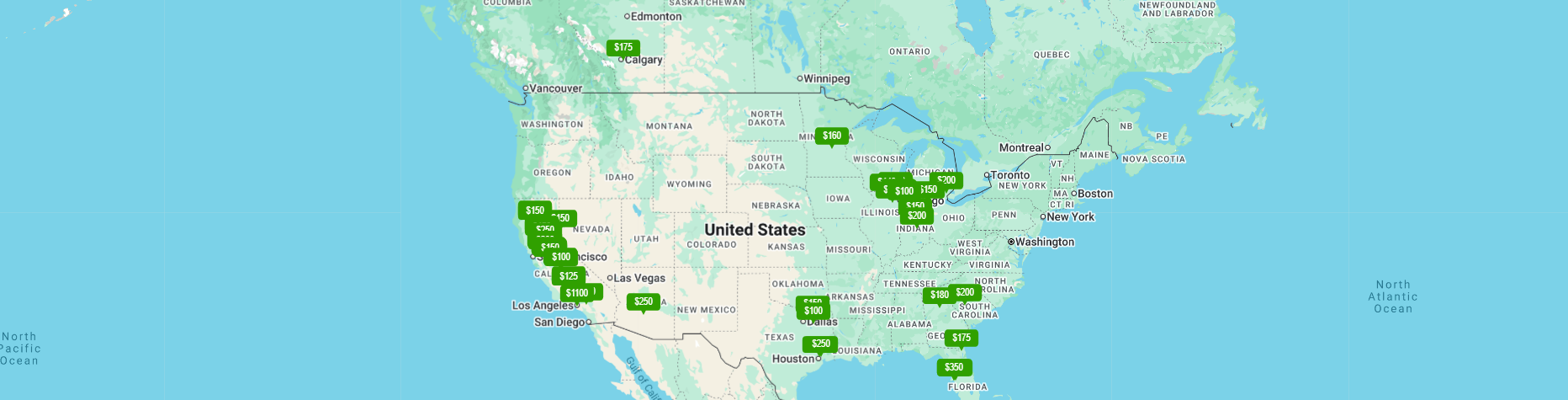
Semiyard’s network of verified truck yards spans all 16 FIFA host cities and their surrounding metro areas. Drivers can search by location, filter by vehicle type (including oversized and trailer-capable spots), and see real-time availability — all from a phone or desktop.
No more calling around. No more guessing if a lot can handle a 53-foot trailer. Semiyard shows you what’s available, where it is, and what it costs — before you’re stuck on the side of the road trying to figure it out.
Book in Advance — Before Matchday Madness
One of Semiyard’s core advantages is the ability to reserve a spot ahead of time. For the World Cup, this is critical. Matchday dates are public knowledge. The games in Dallas, New York, and Miami will drive enormous crowds and massive demand for any available space in those cities.
Drivers who book through Semiyard before the rush won’t be competing with everyone else for a shrinking pool of last-minute spots. They show up, they park, they move on with their day.
Secure, Verified Yards — Not a Random Lot
Not all parking is created equal. Semiyard listings include fenced and gated properties, lighting, surveillance, and in many cases 24/7 access. For drivers carrying valuable freight or parking overnight during a high-foot-traffic event window, this matters enormously.
Every yard on Semiyard is verified, so drivers aren’t taking a chance on an unknown location. The reviews and ratings system gives additional visibility into what to expect.
Skip the Fines and the Stress
The cost of getting this wrong is real. A single towing incident in a major city can run $500 to $1,000 or more. A parking fine in an enforcement zone during a FIFA event isn’t going to be pocket change either. And the time lost — arguing with enforcement, waiting for a tow, rerouting mid-delivery — compounds the damage.
Semiyard eliminates that risk by giving drivers a plan before they need one. That’s not just good logistics. It’s good business.
What Fleet Managers Should Do Right Now
If you manage a fleet that operates through any of the 16 host cities, here’s a practical action plan:
1. Map your routes against the tournament schedule. FIFA matchdays are scheduled well in advance. Cross-reference your regular delivery routes with game dates in each city. Identify which drivers will be operating near venues on high-traffic days.
2. Pre-book parking on Semiyard for those dates. Don’t wait until a week before the match. Availability will tighten as the tournament gets closer. Use Semiyard now to lock in spots near the stadiums your fleet operates around.
3. Brief your drivers on the restrictions. Make sure every driver who operates in a host city understands what’s prohibited near stadiums. A driver who doesn’t know about the trailer ban is a driver who could end up in a costly situation.
4. Build buffer time into schedules. Even if your driver parks legally with Semiyard, traffic in host cities on matchdays will be significant. Build extra time into delivery windows for any runs that pass through a host city on a game day.
5. Keep Semiyard in the driver’s toolkit. Even outside of World Cup dates, Semiyard is a practical resource for finding truck parking in unfamiliar metros. The habit of pre-booking is a good one — and it pays off well beyond this tournament.
The Bigger Picture
The FIFA World Cup 2026 is a massive event and an exciting moment for American soccer. It’s also a reminder that large-scale events have large-scale operational implications — and the trucking industry, which keeps the country running quietly in the background, often absorbs those implications with little support.
Parking restrictions aren’t going away. If anything, they’re becoming more common as cities host more major events and tighten their security perimeters. The drivers and fleets who build smart parking habits now are the ones who won’t be caught off guard next time.
Semiyard exists precisely for this kind of moment: when the old way of figuring it out on the fly stops being good enough, and having a plan is the difference between a smooth operation and a very expensive day.
Don’t Wait Until You’re Parked in the Wrong Place
If your routes touch Dallas, Los Angeles, New York, Miami, or any of the other FIFA host cities this summer, the time to sort out your parking plan is now — not on the morning of a matchday.
Visit Semiyard to search truck parking near every FIFA World Cup 2026 host city in the USA. Find a verified yard, book your spot, and keep your operation moving — no matter what’s happening at the stadium down the road.