




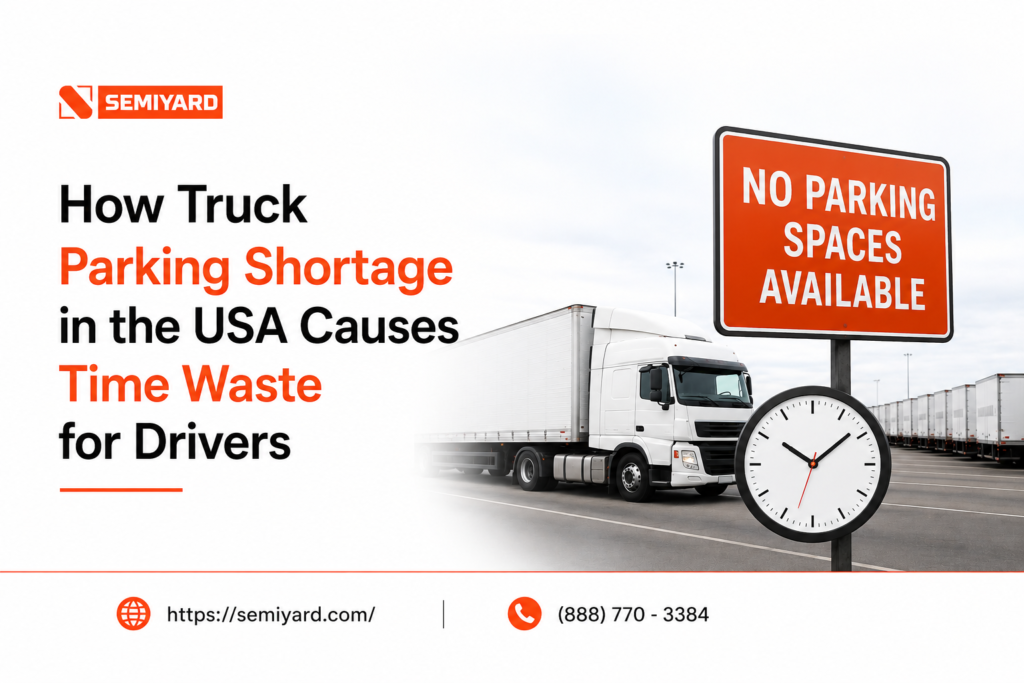
Every truck driver is familiar with the sinking feeling of completing a long haul and then fighting another battle to find the right place to park. Across the USA, the truck parking shortage has turned end-of-shift tasks into a stressful, time-consuming ordeal that not only affects safety but also the entire supply chain.
Table of Contents
ToggleKey Takeaways
-
- The truck parking crisis is real! 98% of drivers regularly struggle to find verified parking, costing time and income.
-
- Drivers lose about 56 minutes and 15 extra miles per day searching for parking, which reduces paid miles and increases fatigue.
-
- Structural causes include rising freight volume, HOS/ELD rules, zoning limits, and high land/construction costs.
-
- Safety risks rise when drivers park illegally or stay fatigued, increasing accidents, claims, and driver turnover.
-
- Real-time apps and reservable long-term monthly parking cut search time and improve schedule predictability.
-
- Platforms like Semiyard complement public investment by offering reserved spots and major route-accessible yards.
According to studies, 98% of truck drivers regularly struggle to find verified truck parking. On average, drivers lose 56 minutes every single day just searching for a spot. That adds up to 15 miles driven daily and thousands of dollars in lost income every year.
The truck parking shortage is not just a minor inconvenience but a daily crisis that wastes time, increases fatigue, and creates a ripple effect felt by everyone in trucking.
This piece of writing breaks down exactly why the problem exists, how it wastes driver’s time, and what practical steps the industry can take, including modern solutions that are already helping fleets and owner-operators regain control of their schedules.
Also Read: Monthly Vs. Daily Parking
The Scale of Truck Parking Shortage in America
Every single day, approximately 2.4 million trucks need parking for their required 10-hour break. Nevertheless, access to parking spaces is what is realistically less available to truckers! This leaves a huge impact on the shortfall of spaces on any given night or day.
With the increase in freight volume, the truck parking shortage has worsened. There is no denying the fact that several factors such as e-commerce, just-in-time delivery, and population growth have all increased parking demand USA vastly. It won’t be wrong to say that general rest stops fill up fast and are not secure when it comes to verified parking and safety.
But like every other problem, the parking shortage also has a rescue option. Truck parking facility providers, such as Semiyard Truck Parking, offer instant as well as pre-reservation services for trucks, fleets, and other commercial vehicles. Independent truckers, fleet owners, and logistics professionals can reap the benefits and say goodbye to the haunting days of hunting parking everywhere only to be disappointed by the shortages!
Why the Truck Parking Shortage Keeps Growing
Several powerful forces are driving the problem:
-
- Hours-of-Service rules and ELD enforcement require drivers to stop more frequently and for longer periods. This increases the total number of parking events needed each week.
-
- Freight volume continues to rise. The industry is projected to move significantly more tonnage in the coming decade, meaning more trucks on the road competing for the same limited spaces.
-
- Local zoning rules and city ordinances often push trucks out of urban areas and away from warehouses, forcing drivers to travel farther to find legal parking.
-
- Land and construction costs make it difficult to build new facilities quickly, especially near major corridors where demand is highest.
These factors combine to make the truck parking shortage a structural issue rather than a temporary inconvenience.
How Truck Parking Shortage Directly Wastes Drivers’ Time
The most immediate and concerning impact is lost time and driver fatigue. Drivers routinely spend nearly an hour each day in parking search time waste, usually circling lots, checking multiple truck stops, or driving extra miles hoping to find an opening before their clock runs out.
This parking search time waste is not just frustrating; it directly reduces the miles a driver can legally log. Many drivers are forced to stop earlier than planned just to reserve a spot, creating unnecessary driver downtime. That lost time cannot be recovered. It means fewer paid miles, lower weekly earnings, and more stress.
Truck stop congestion makes the problem worse at the busiest locations. Popular facilities fill up early in the evening, leaving late-arriving drivers with no choice but to keep searching or risk parking illegally on ramps or shoulders. The combination of truck stop congestion and more searching loops turns driver rest time into additional work.
Gradually, such patterns create chronic driver downtime that hurts both the individual and the company they work for.
Safety Risks and Fatigue Created by the Shortage
When legal parking is unavailable, some drivers feel pressure to keep moving or to park in unsafe locations. Parking on highway shoulders, exit ramps, or unlit industrial areas increases the risk of accidents, both for the truck and for other motorists.
Fatigue is another hidden cost. The stress of not knowing where you will park, combined with lost rest time due to the parking search time waste, leaves drivers less refreshed for the next shift. This is especially dangerous because tired driving remains one of the leading causes of preventable truck crashes.
Fleet owners and safety managers see the downstream effects in higher insurance claims, roadside inspection issues, and difficulty retaining experienced drivers who grow tired of the daily parking battle.
Ripple Effects: Logistics Delays and Higher Costs
The truck parking shortage does not stay contained to the rest. When drivers lose time searching for parking or must stop early, delivery windows slip. These small delays compound across the supply chain, creating logistics delays that affect warehouses, retailers, and ultimately consumers.
Fleet owners feel the pressure in several ways:
-
- Increased fuel consumption from extra miles driven during searches
-
- Overtime or detention pay when drivers cannot make planned handoffs
-
- Higher turnover as quality drivers leave for companies or regions with better parking access
-
- Missed customer commitments that damage relationships and future business
Logistics delays caused by parking problems also raise overall freight costs. Someone eventually pays for that lost productivity—and it is usually passed along the chain.
Practical Steps Drivers and Fleets Can Take Today
While the long-term fix requires more parking infrastructure, there are immediate actions that reduce the daily pain:
- Use real-time parking availability apps, like Semiyard, and plan routes around known capacity.
- Reserve parking in advance for a more seamless and hassle-free experience.
- Look for parking near major routes and service centers.
- Consider longer-term parking arrangements for consistent base or regular routes.
Fleet managers can support drivers by providing parking strategy training, using platforms that show available spots, and becoming members of parking providers.
A Better Path Forward: Modern Solutions to the Truck Parking Shortage
Technology and private-sector innovation are already helping ease some of the pressure. Real-time availability systems, reservation platforms, and secure gated facilities give drivers more predictability than traditional first-come, first-served truck stops.
One standout option that is gaining attention among drivers and fleets is Semiyard truck parking. Truckers, fleet owners, and logistics professionals can reap the benefits of monthly truck parking at multiple locations across the USA through an easy-to-use driver app. Drivers can book spaces in advance, receive a personal gate code, and enjoy features such as lighting, restrooms, 24/7 access, quick proximity to major routes, and truck repair services.
By providing dedicated, reservable parking, Semiyard helps drivers avoid the daily scramble that defines the current truck parking shortage. This type of solution directly attacks parking search time waste, reduces unnecessary driver downtime, and helps prevent the logistics delays that hurt everyone in the supply chain. For fleets and owner-operators who need consistent parking near key routes or terminals, having a long-term monthly option removes a major source of daily stress and lost productivity.
As parking demand USA continues to grow, scalable private solutions complement public efforts and give the industry breathing room while larger infrastructure projects move forward.
Moving Past the Parking Crisis
The truck parking shortage is costing the trucking industry more than $100 billion annually in lost productivity, extra fuel, and safety-related expenses. It wastes drivers’ time, shortens their careers, and creates unnecessary friction throughout the supply chain.
The good news is that the problem is solvable with a combination of smart policy, infrastructure investment, and innovative private solutions. Drivers and fleet owners who take proactive steps today, using better planning tools and exploring long-term parking providers, can immediately reduce the time they lose to parking hassles.
For those ready to stop wasting hours circling lots and start focusing on what matters—safe driving and on-time deliveries—modern parking platforms offer a practical way forward. Semiyard truck parking stands out as one of the most accessible options for securing dependable space without the daily uncertainty that has become far too common in the American trucking industry.
The sooner more drivers and companies adopt these solutions, the sooner the daily time waste caused by the truck parking shortage begins to shrink. Safe travels, and may your next parking spot be waiting for you when you need it.
FAQs
How common is the truck parking shortage in the USA?
The shortage is widespread: studies show 98% of truck drivers regularly struggle to find verified parking. About 2.4 million trucks need a 10-hour break daily, but supply near major routes is limited, making parking searches a near-daily problem for most drivers.
How much time do drivers lose searching for parking?
Drivers lose an average of 56 minutes daily searching for parking. That adds roughly 15 extra miles driven each day. Over weeks and months this reduces paid miles, lowers earnings, and increases driver fatigue and stress, affecting safety and productivity across fleets.
What factors cause the truck parking shortage?
Multiple forces drive the shortage: rising freight volume, stricter HOS and ELD rules, urban zoning that limits nearby truck parking, and high land and construction costs. Together, these create a structural issue that simple short-term fixes cannot fully resolve.
How does the truck parking shortage affect safety and fatigue?
When verified parking is unavailable, drivers may park on shoulders or unsafe spots or keep driving while tired. It increases crash risk and reduces rest quality. The stress and lost rest time also boost insurance claims and hurt driver retention for fleets.
What are practical steps drivers can take right now?
Use real-time parking apps, reserve spots in advance, plan routes around known capacity, and seek parking near major service centers. For regular routes, consider long-term monthly parking to ensure predictable space and reduce daily search time and stress.
How do reservable parking platforms help fleets?
Reservable platforms offer pre-booked spaces, gate codes, lighting, restrooms, and proximity to routes. They cut search time, lower extra`4 miles and fuel use, and improve schedule reliability. For fleets, this reduces detention, overtime costs, and driver turnover tied to parking stress.
Is long-term truck parking a solution to the shortage?
Parking providers can scale faster than public projects and offer immediate relief through reservable spaces. While not a full replacement for infrastructure investment, private solutions complement policy and construction efforts and deliver measurable time savings and safety benefits now.